The book Wild City is now available from Watkins Publishing • Preorder here •
Wastelandz
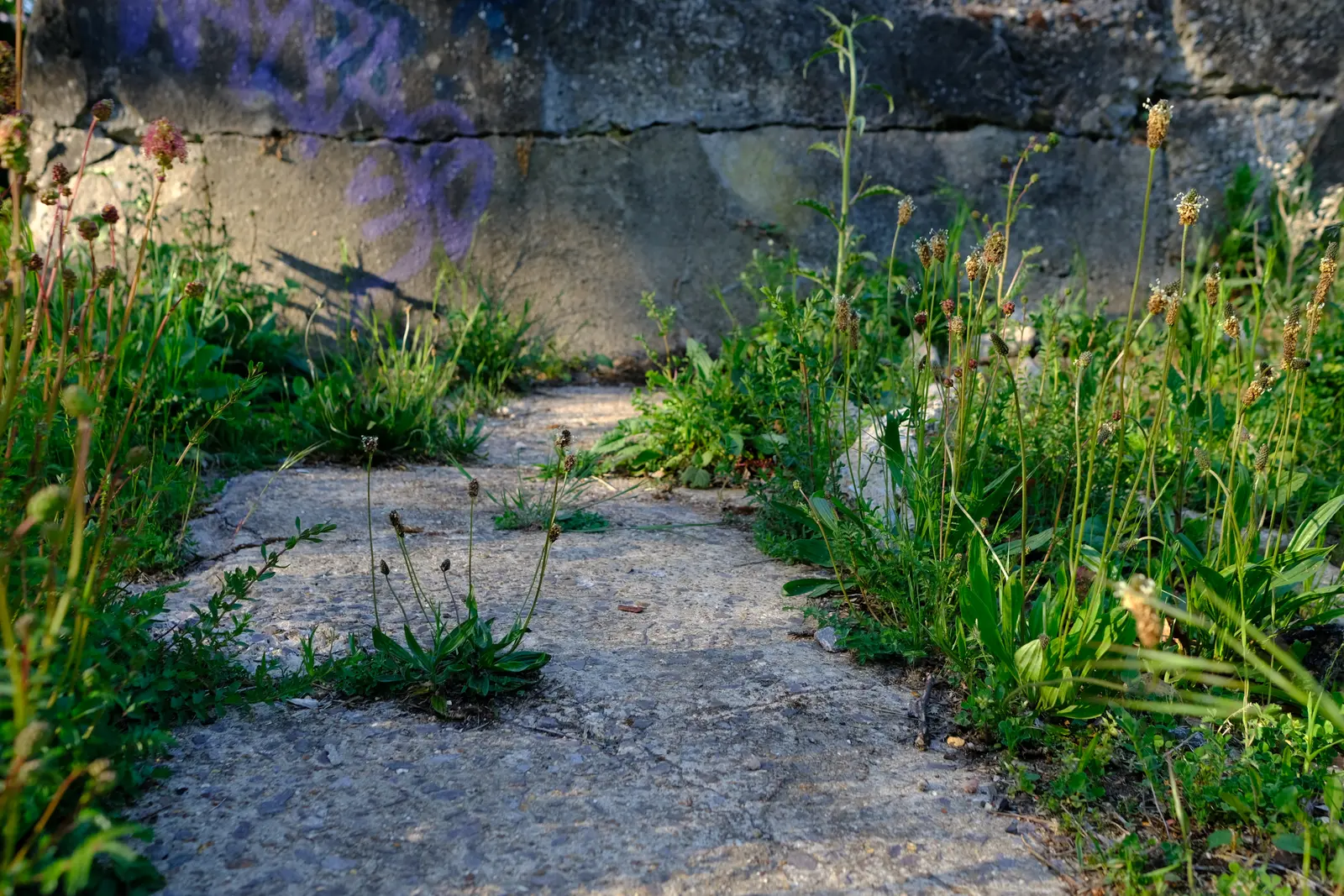
Childhood explorations, analogue photography, and the beginnings of a design philosophy. How exploring the wastelands taught me to see the city as nature.
I grew up in Derby. I spent my youth exploring the fields between my house and the council estate next door. The intrigue of finding a burnt-out car or rusty moped was just as exhilarating as climbing a tree. I still remember the times we first explored the brook, every day after school seeing how far we could get before we had to get back for tea. Saturdays were the one, roaming for hours, the trickling stream as our guide. I remember one time we emerged out of the brush to find ourselves at the side of a busy dual carriageway. A road sign said ‘Nottingham’. I thought we’d walked the whole way – we’d probably only gone a few hundred metres, but the sense of adventure felt like days.
As we got older we got used to the scale of it. We knew it off by heart, every twist and turn. It became our playground, linking up with other areas, coming out into industrial estates and neighbouring streets, and eventually the city itself. This was my nature connection, a real sense of exploration and escapism, even danger, not knowing who or what was around the corner. As we got older our interests changed, but the fields were always ours, somewhere to escape to, away from rules and prying eyes.
In my late teens I’d started exploring a lot of the city on my own. I’d cruise around on my BMX, earphones in, and I’d go all over Derby. This coincided with finding a passion for photography. I didn’t know it then, but these forgotten edges of the city would be the reason I design gardens and landscapes the way I do now.
NEW TOPOGRAPHICS
I hated school. A combination of being cripplingly shy and a fear of getting things wrong. I had no real ambition once I left, but at 17 I found myself on an art foundation course. Creativity seemed a much better fit for me, perhaps not something I could get ‘wrong’, but I had no goal. I drifted aimlessly along the course until we did photography. There was a darkroom at the college and suddenly my dad’s old Canon AE-1 I’d always seen on the shelf at home started looking back at me.
I now had the perfect combination: my BMX and a camera. There’s a romance to analogue photography, a far cry from phone cameras and social media nowadays. The beauty was in the mystery; you couldn’t see your pictures until you got back to the darkroom. In the moment, out in the city, it wasn’t about the pictures – it was about the exploration. The camera gave it purpose.
I became fascinated with abandoned places: partially demolished, derelict houses, industrial estates, burnt-out shipping containers and old industrial buildings. All these places had one thing in common – there was very rarely anyone there. This gave me a sense of comfort and freedom. Through a camera lens these places took on a new life. Suddenly the old walls, lines and textures became framed compositions. These places people would walk past every day and ignore became fascinating to me. I’d discovered a genuine beauty in the banal.
After a year of not turning up to lectures, I wandered into college with a collection of films for my final project. As I started to develop the film, my tutor suddenly began to take a bit more of an interest than before. Something had resonated, and I was introduced to a collection of photographers from the 1970s who were part of the New Topographic movement.
The New Topographic movement revolutionised landscape photography. It was a reaction to nature depicted as pristine landscapes made popular by photographers like Ansel Adams. The New Topographic movement documented ‘man-altered’ landscapes, focusing on a banal and deadpan aesthetic of mundane, everyday environments – new sprawling suburban estates, car parks and industrial sites.
This was a big deal. From having no aim, or even any feeling that I was any good at this stuff, the pictures I’d taken were almost identical in style to this movement. I was doing work just like these accomplished, respected, but most importantly rebellious photographers. Suddenly I had purpose and a vehicle to move forwards.
IF WE ARE NATURE THEN SO IS THE CITY
I rolled onto a photographic art degree at 19 in Newport, South Wales, now with somewhat of an ego about me with this new identity I’d found. The course was quite new and with that came a bit of freedom to do what you wanted – and I definitely did. I ignored the structured briefs as much as possible and began evolving a concept that would stick with me from then on.
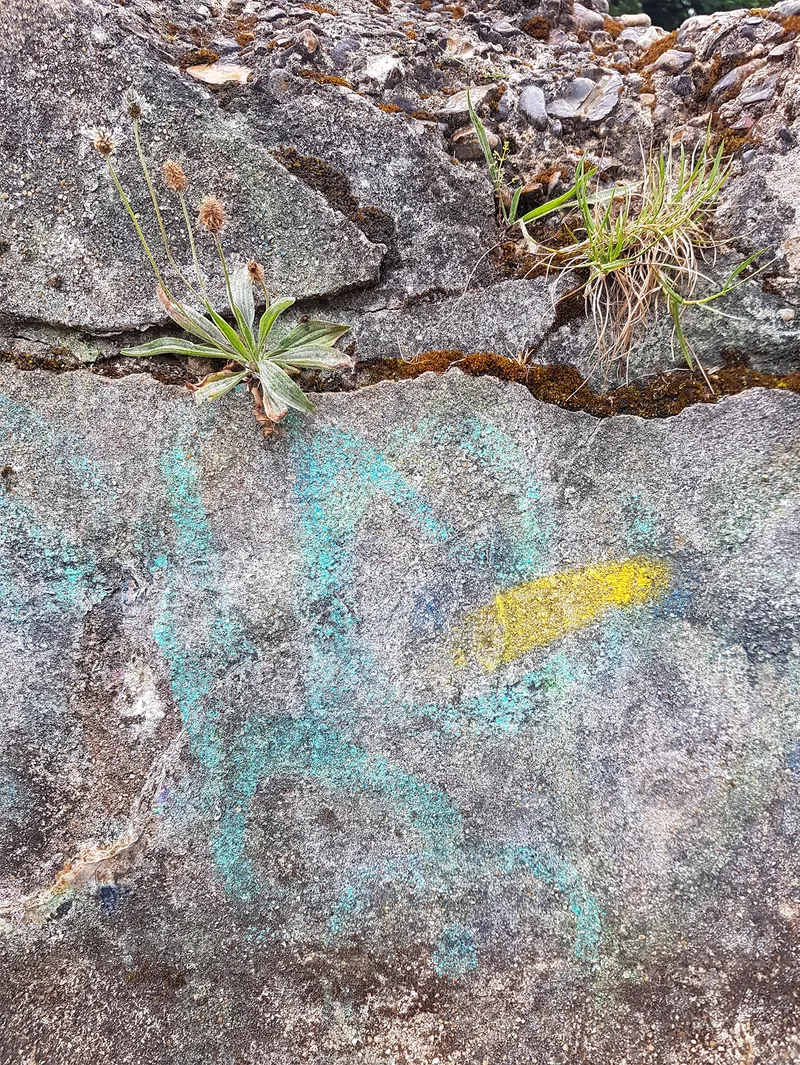
The more time I spent photographing and exploring these kinds of places, the more I spent time thinking about what this stuff symbolised. Why was I drawn to these spaces? The decay, urban grit, textures upon textures of flaking paint, rust and scorch marks creating an ever-evolving accidental tapestry.
This was nature.
Even though these were hard urban scenes, the more I focused on the detail, the more natural patterns and textures started to form. If we are nature, then so is the city – and if you look at it differently you can see these natural processes everywhere. The urban landscape is not separate from nature; it’s just a unique part of it.
This culminated in a final-year exhibition in Brick Lane, London, which I entitled New Planet. “the fear we are destroying the planet is born out of the fear we are destroying ourselves”.
As much as this course gave me the freedom to explore these concepts, it had killed the curious kid on the BMX. Too much ego, too many questions, and critically, now in the real world, how was any of this going to make any money? It wasn’t. The ideas I was grappling with seemed far more poignant than simply hanging pictures on a wall, and I was ultimately spat out the back end of an art degree, like many others, again with no real aim or focus. I knew how I saw the world, but that way of seeing made little sense in the world I was in now.
THE ANSWER WAS GARDENING
After university I drifted through my 20s. A collection of meaningless jobs and other worldly travel experiences. I was lost, depressed and bitter that I had found something I was passionate about and lost it. I started to exercise as a way to give myself purpose and stability but even that, after a while, felt a bit futile. In my late twenties I had to do something, it didn’t matter what it was, I just had to make a decision. I needed to be outside, I needed to be physical but I also needed to earn a living… ultimately my answer to this was gardening.
One afternoon I was cutting my Nan’s hedge, keeping myself busy between Xbox and signing on. A woman from up the street walked past and asked if I did this professionally. I didn’t at the time but I just said yes. Pretty soon I was mowing lawns and cutting hedges all over Derby. I set up a garden maintenance business and felt like I’d hit the jackpot, I remember buzzing off the first twenty quid I got for mowing a lawn. Not only was I earning a living but I was grounded, the headiness I’d felt during my degree had faded and I felt humbled. I’d switched out the BMX for a black Vauxhall Astra hatchback, slinging my mower and hedge trimmer in and out, I was rolling.
As much as I’d moved away from that nihilistic nineteen year old, that part of my brain was always there, the analyst, the critical thinker, always conceptualising. Instead of the weathered textures of urban decay I started to question what these ‘weeds’ were that I was constantly asked to remove from rose borders. I’d spend more time in traffic on dual carriageways these days than cruising around the streets on my BMX. Why are these motorway verges so much more dynamic than the blousy plant palettes I saw in dusty gardening books? Why can’t I create a meadow or a woodland in a garden, the kind of places I grew up in…
Why can’t I create a garden in a wasteland?
I moved to Bristol, caught up with a group of mates who’d all jumped the bridge from Newport as I’d gone back home to Derby. Bristol is a vibe of its own and that reconnection stirred the artist back up in me. I trained as a garden designer. Suddenly I was being shown pioneering landscape designers who were looking at nature for inspiration. A lightbulb went off, I have something to say here, a unique perspective to bring to the table. ‘Nature’ isn’t just ‘out there’, it’s already in the city, it’s already in us, we are nature. I’d developed an interest in design and public spaces and suddenly those old photography concepts were given new life, a brand new vehicle that could actually have an impact, not only on the environment but on people and community.
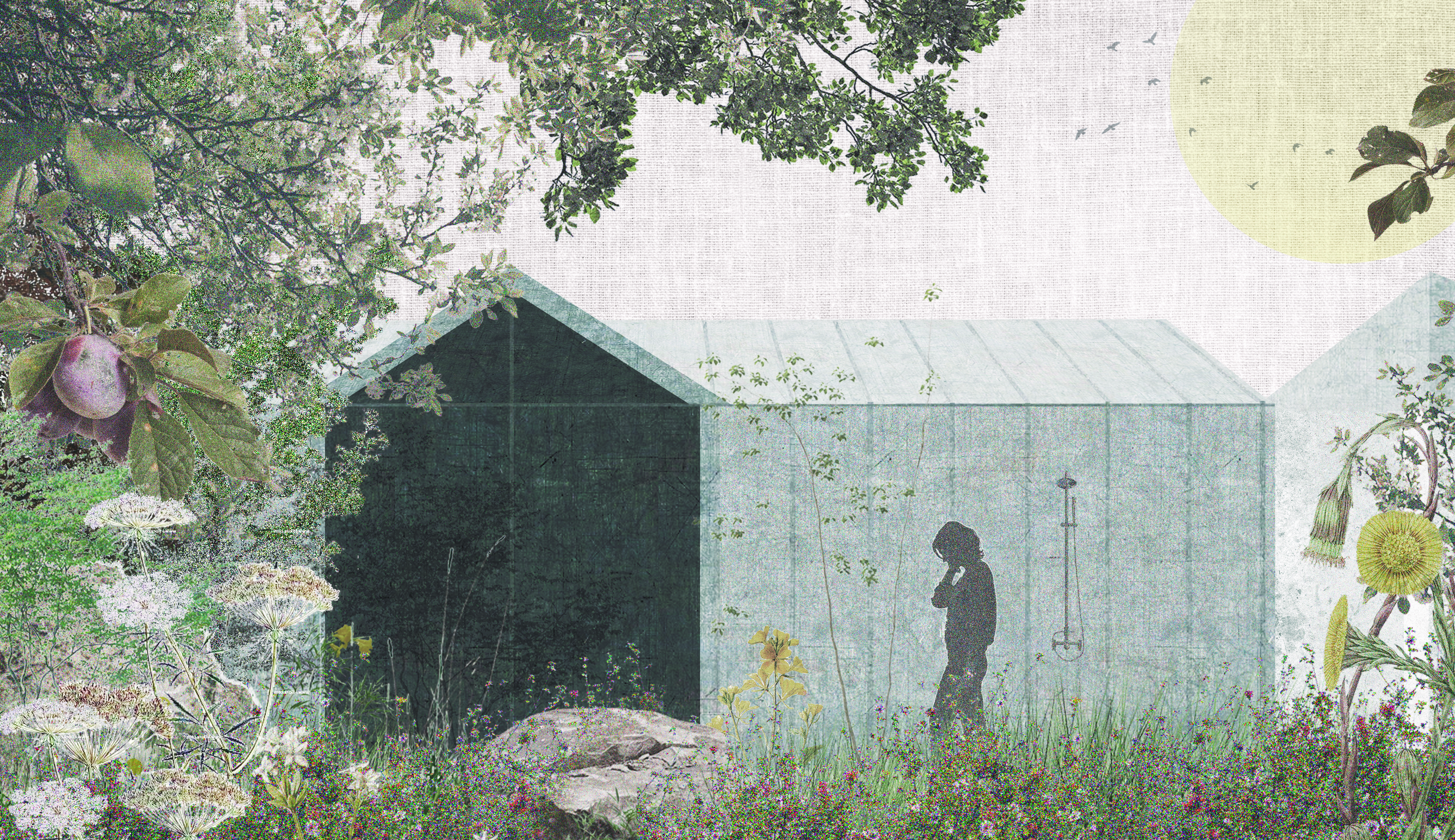
My style evolved. Before I would emulate typical features I saw in gardens, nice enough but only surface level. I Learned how to create original compositions and think outside the parameters of just gardens. Establishing a foundation in the creative process gave new depth to my work. The city a concrete canvas, embracing the juxtaposition between the hard lines of human built structures and a wild ecology.
My rebellious spirit had been galvanised, a confidence to push the boundaries and disrupt the status quo, two versions of myself at a meeting point with a clear direction forward. There are opportunities to reimagine these places threaded throughout our cityscapes, celebrate what they once were and what they can become. Pioneering landscape architect Julie Bargmann refers to these landscapes as our ‘Urban Frontiers’, new types of landscape up for grabs. We need to salvage these spaces before it’s too late.
When I’m back in Derby I sometimes visit the old spots I grew up in, the old industrial ruins are now gone, lifeless blocks of flats emerge, the fields now new tidy housing estates. The brook is still there but the old routes and passageways we had carved through constant wandering have long since grown over.
If you enjoyed this essay, subscribe to my newsletter for future Wastelandz articles, garden design ideas and behind-the-scenes updates.
More Articles