The book Wild City is now available from Watkins Publishing • Preorder here •
HOW WILD DO YOU WANT TO GET?
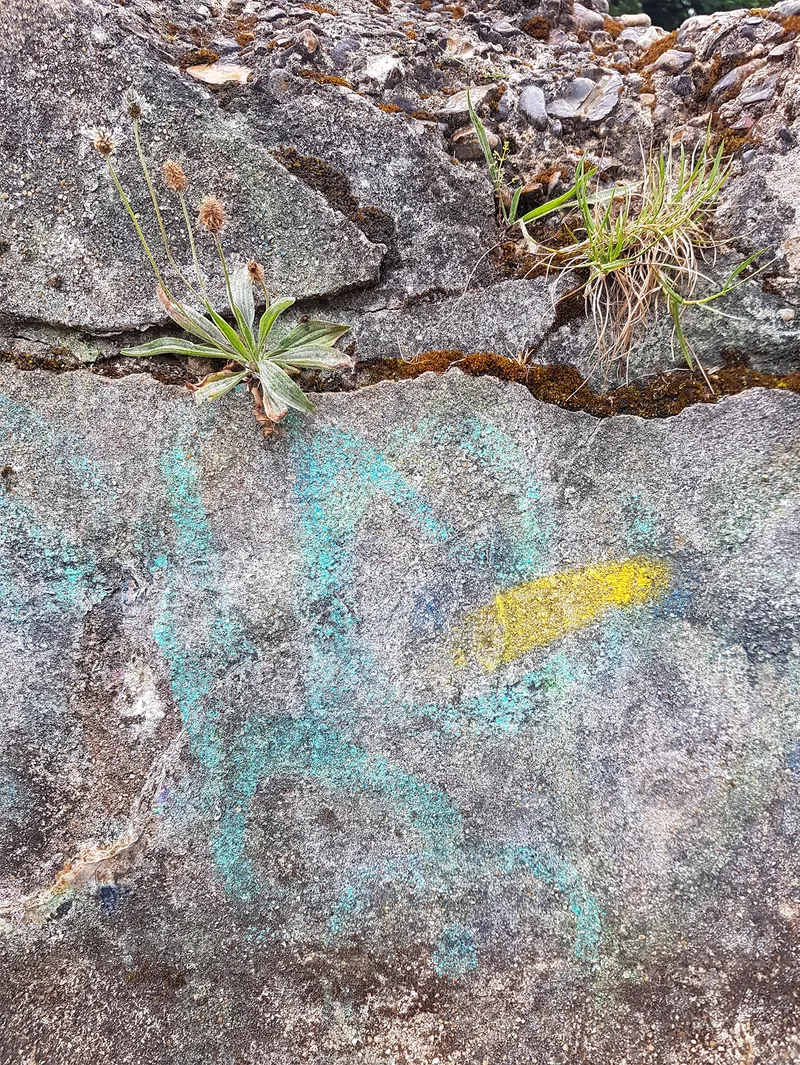
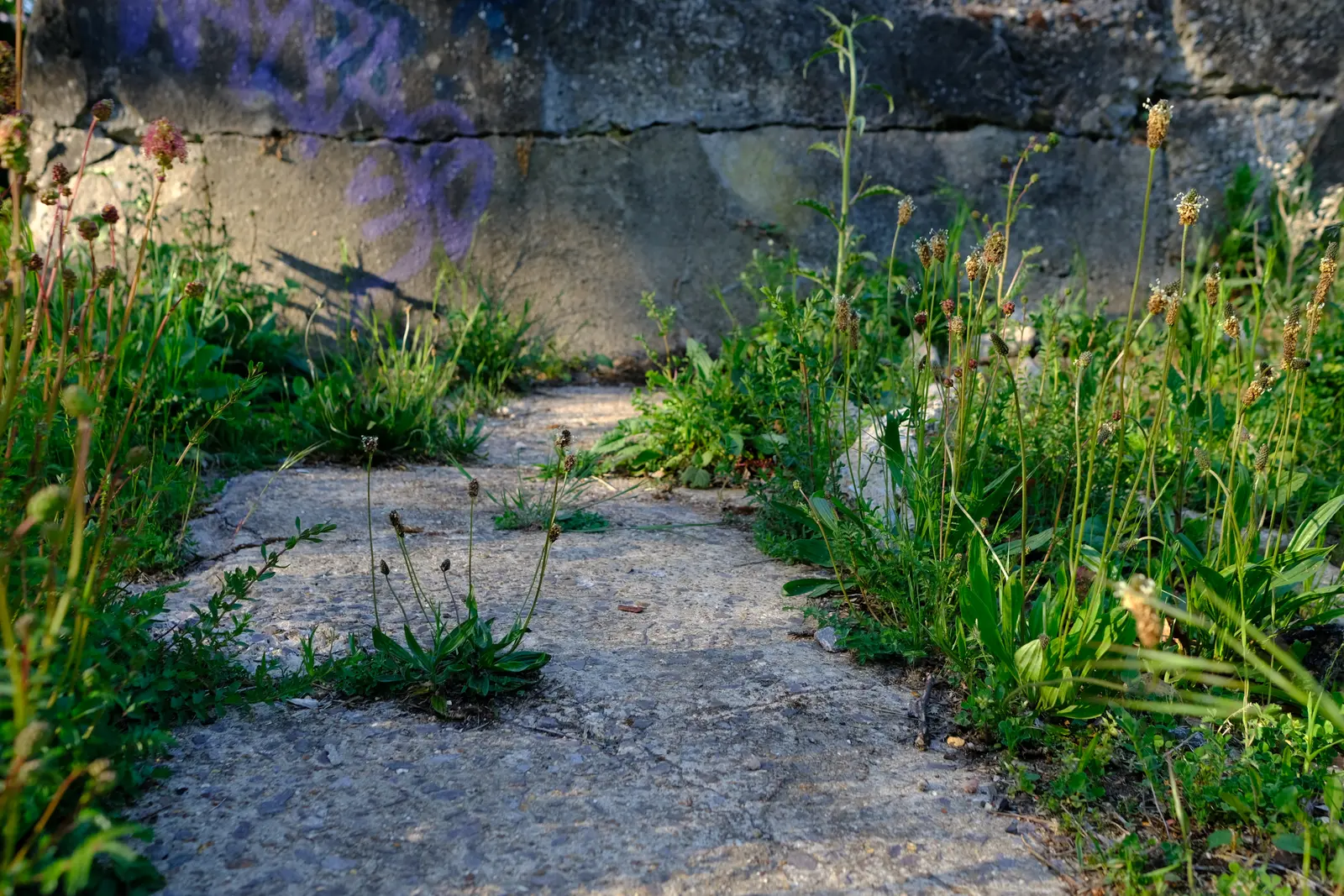
This is a question I often find myself asking. On visits to new projects and when meeting new people, there is an inevitable moment when somebody might ask me whether they need a clipped lawn — and even the cracked concrete, full of wildflowers, has an ever-growing fan base. This always leads me to say, “Well… it all depends on how wild you want to get.”
FROM MAINTENANCE GARDENER TO REBELLIOUS DESIGNER
I talk about wild gardens a lot now as a designer, but I started my career in horticulture as a pretty haphazard maintenance gardener, maintenance being the operative word. It was very much about keeping gardens the same: static, and at times even sterile. Doing the bidding of traditional garden owners, weeding driveways and rose borders week in, week out. I even sprayed my fair share of glyphosate back then.
All gardens require care, even wild ones, but it was during those first years that I began to ask myself: why am I doing this? And most importantly, what is a weed?
This is a common question in the gardening world and something I get asked a lot. My favourite definition of a weed is “a plant in the wrong place”. It’s simple, easy to understand, and keeps us out of the more deeply philosophical conversations. Of course, what is wrong, or right, is totally subjective and down to your own interpretation… so basically, permission to do whatever you want!
Over the many years since I started as a gardener, and now as a rebellious designer, I’ve come to love pushing the limits of what a garden can be.
GARDENS AS PLAYGROUNDS
Gardens, for me at their best, are a playground, a place you can experiment, be free, get lost in, and escape from the stresses of modern life. For many people these days, gardens full of plants seem like an impossible luxury. “Gardening” feels like something your grandparents did. Now, between fast-paced jobs and families, people simply don’t have the time to spend mowing lawns or weeding borders, or at least would rather not.
For some, this leads down the dark road towards artificial grass or paving en masse, at least something that stays static, something they know they can manage. For others, it’s the status quo: a big patch of lawn and some narrow borders, usually what was inherited when they moved in.
It’s quite common for your garden to be referred to as another room in your house, often an undervalued resource. But it’s also often treated in the same way: static and unmoving. Plants are treated like furnishings, like a new lamp for the sideboard. Something we like the look of in the garden centre, take home, put in its place, and then keep on life support through watering and weeding. Inevitably, this plant eventually dies, and the cycle continues.
Gardens become a source of anxiety rather than a place of solace. Even hardened nature lovers can feel uncomfortable with the idea that their gardens might become an untamed mess.
This is where I come in.
A LIGHT TOUCH
It’s very easy to “wild” your garden by doing very little, but without intention it can quickly become an unkempt sea of brambles and, eventually, an impenetrable wilderness.
This is not a garden.
What we are aiming for is to bring nature back into our everyday lives. The key to this is establishing a balance between wildness and functionality. This approach isn’t about fully letting go; it’s about learning a new way of management in place of the rigidity of “maintenance”.
Through a lighter touch and less heavy control, we can become more like editors than expert gardeners, letting plants blend, embracing the self-seeders and wildflowers, the “weeds”. It’s this kind of dynamism that can make gardens so special, and by learning to let go, a new harmony can be found, one that’s good for us and a huge boost for local wildlife.
LEARN FROM WHAT'S ALREADY GROWING
Part of this adjustment is learning to understand the roles of specific plants and habitats. When we recognise the part different plants play in ecological systems, their benefits to wildlife, and their impact on our own wellbeing, beauty begins to extend beyond purely aesthetic value. Understanding that nature can have a “bad hair day” allows a new freedom in the garden. The key is intention rather than abandonment.
Observe what is growing naturally in your garden and use it as inspiration for new approaches to resilient gardening and planting. The wildflowers freely growing through the concrete, or small patches full of tiny ecosystems, these are often what people find so intriguing. But it’s how we take inspiration from them, and how we give people permission to also love things just as they are, that really matters.
HARD LINES FRAME THE WILD
Before I became fascinated with ecology and plants, I loved the craft of hard landscaping, paving, walling, executing things with precision. Plants always took a back seat in the early days. Even further back as a photographer the urban scenes I photographed, I rarely incorporated any plants but it’s in this juxtaposition, that’s where the magic lies.
You’d be forgiven for thinking a “wild garden” is full of curves, wiggly paths and disorder. All my designs start with the straight line. These lines might soften over time, or even during the design process, but those straight, hard lines initially act as a guide rail: a visual cue that frames the wild. These hard lines are where our anxieties can rest. This is deliberate and intentional, satisfying the urge for control.
For small urban gardens, you don’t need much. All you need is a place to be and a way to get there. Make the planting areas as big as you can. Fill them with multi-stem trees, shrubs, and mass plantings of perennials. Even throw a load of seed at it if you want and see what unfolds. With the hard lines in place, the rest really can get as wild as you’re willing to let it.
RECONNECT WITH NATURE AND EACH OTHER
So many of us are disconnected from nature, especially in cities. A garden can be a place to pause, exhale, and reconnect not only with nature, but with each other too, a place for families and friends to spend time together, our own quiet rebellion, away from the trappings of modern life.
If you enjoyed this essay, subscribe to my newsletter for future Wastelandz articles, garden design ideas and behind-the-scenes updates.
More Articles